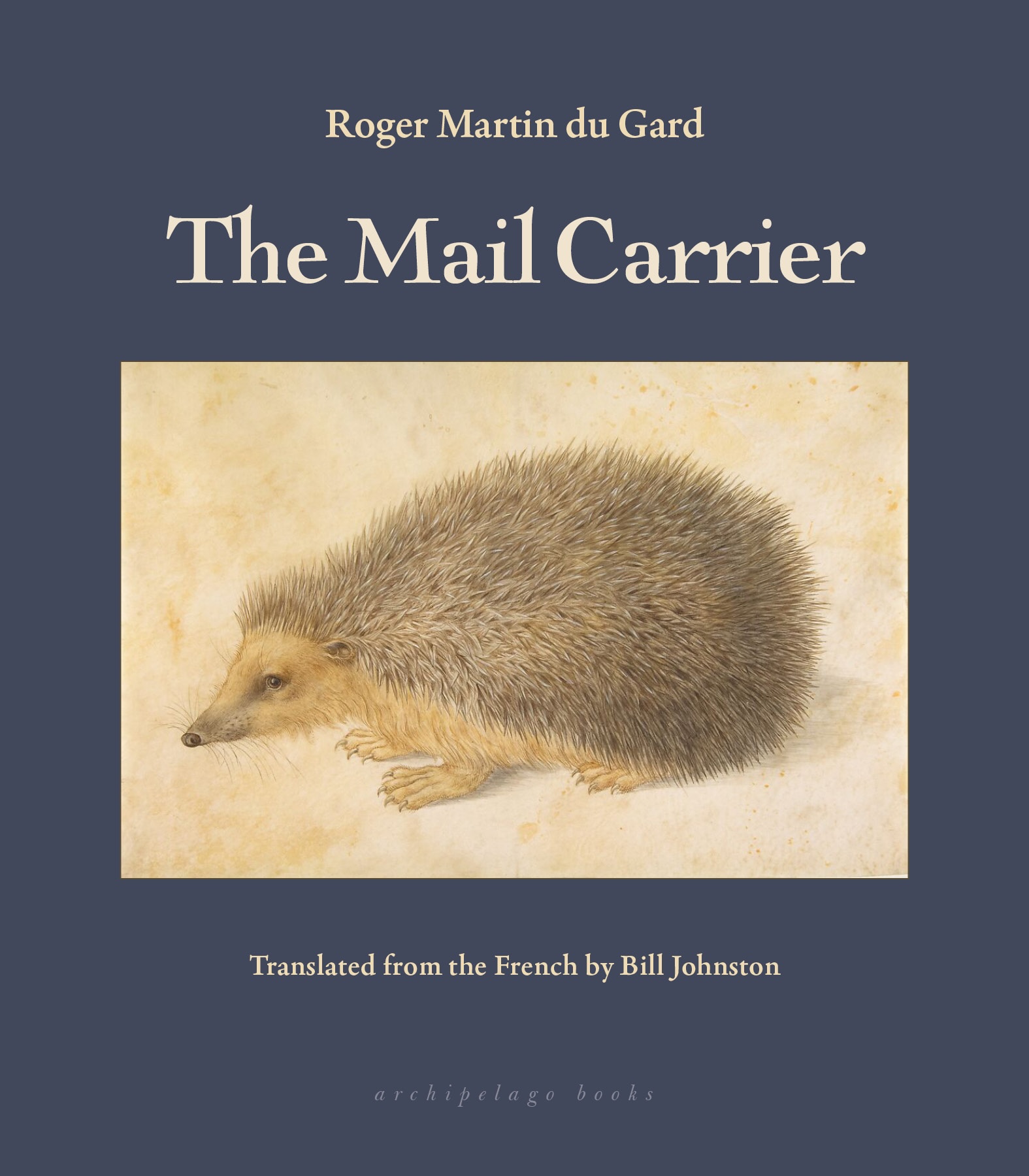
The Mail Carrier

by

Translated from by

Published: April 6, 2027

Paperback ISBN: 9781962770873

Ebook ISBN: 9781962770880

SKU: N/A Category: Tag:
This item will be released on April 6, 2027.
$24.00

A propulsively prying sketch of French village life from Nobel laureate Roger Martin du Gard, an admired contemporary of André Gide & Albert Camus

The Mail Carrier opens with the pink shadows of dawn and closes in the red glow of sunset’s rays. In between, a day unfolds like a crumpled missive that has fallen into the wrong hands. As Joigneau the postman sets off on his rounds, he already knows more than he lets on (he has a habit of steaming open envelopes and delivering them a day late). Each morning, Joigneau indulges in the town’s “little secrets of the moment” sorting through his stuffed sack of telegrams, letters, bills, and summonses. Unscrupulous and crafty, he keeps extra brochures in his pocket—a ready excuse to enter anyone’s home as his curiosity moves him. His roving eyes expose the often petty, circumscribed world of the villagers (and his own unsavory motives). The bakery’s fobbing off old loaves on customers. The bartender at the café-tabac is scheming to move into old mother Daigne’s envied “villa.” Pregnant women avoid the grocery, afraid of the evil eye of its proprietor sulking in the back room. What Roger Martin du Gard calls his “simple album of village sketches” renders the presumptions and concerns of the villagers in clear, light-footed prose that captures the vital rhythm of provincial life. The Mail Carrier, like the changing light that moves over the town, is a revealing and beautiful force.

Want a discount? Become a member by purchasing Gift Membership, Memberships or Archipelago Digital Membership!

Praise

Martin du Gard was not by his own account a very cheerful man; he even thought in his bluer moments that as a maker of fiction—and despite his success, which included the 1937 Nobel Prize in Literature—he had come to the novel a generation too late. Fine writing wasn't his thing, objectivity was: he thought that a novelist should give us the material world—the places, people, things that fill it to overflowing—as plainly and substantively as he knew how.
John Sturrock, The New York Times
With him I can let myself go and be perfectly natural.
Andre Gidé
After his pointed and skeptical analysis of the human soul, which almost consumes its object with its often-extreme exactness in detail, through the most minute realism possible, Martin du Gard finally pays homage to the idealism of the human spirit.
Presentation Speech by Per Hallström, 1937 Nobel Prize 1937

You may also like…

A nonprofit press devoted to contemporary & classic world literature

The Old American Can Factory
232 3rd Street Brooklyn NY 11215